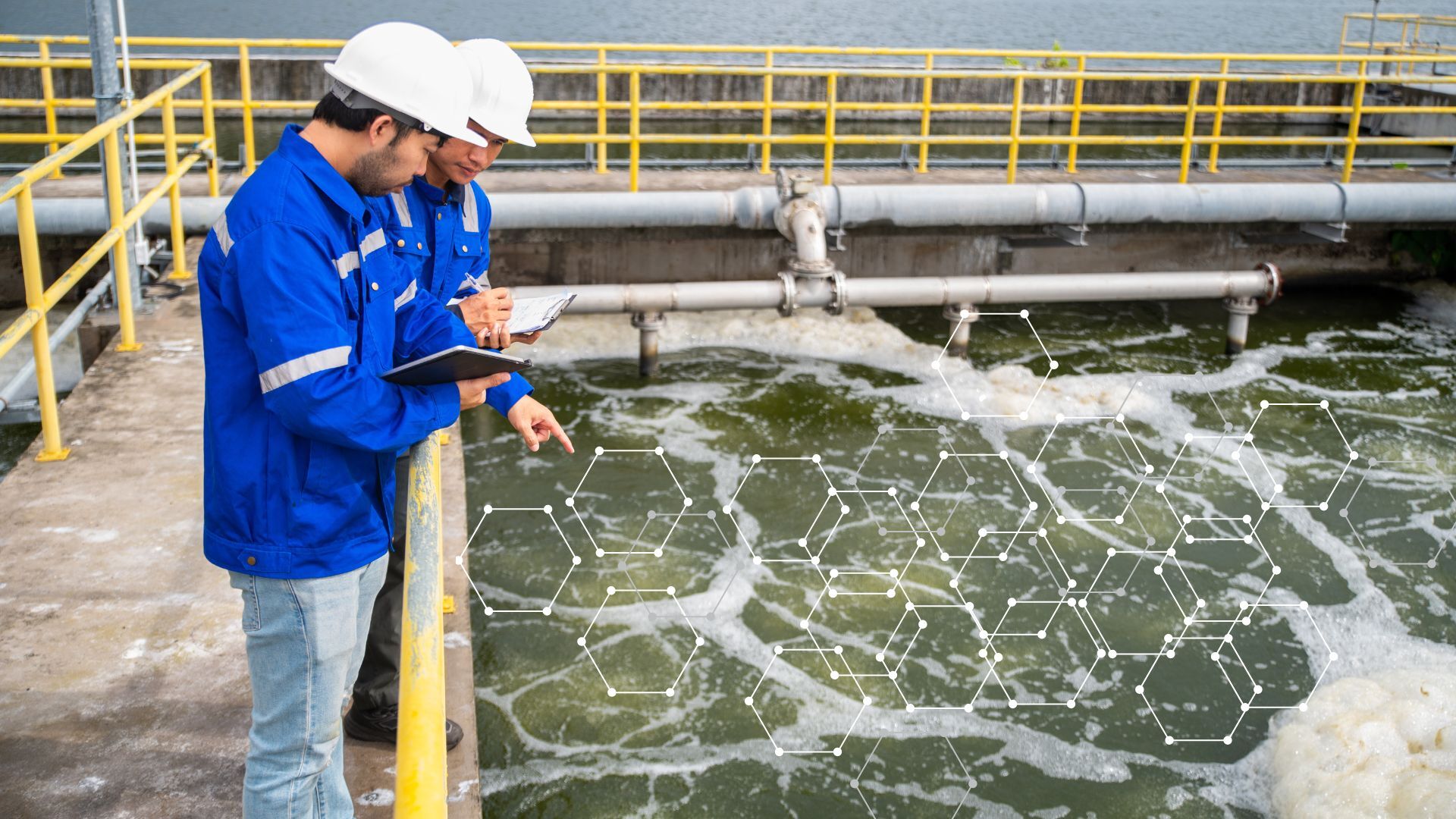

How digital optimisation of wastewater treatment plants unlocks hidden capacity, reduces energy costs, and builds compliance readiness for 2028 EU regulatory requirements
At a glance:
- 5.7 billion m³ of wastewater discharged untreated across Europe annually - a critical capacity challenge
- Digital optimization delivers 20-50% capacity increase without physical expansion or capital investment
- Three-pillar approach: Anticipate demand, Optimize energy use, and Operate with enhanced expertise
- Evolving EU regulations make digital monitoring platforms essential for compliance and competitive advantage
- Proven impact: 78,000+ tonnes CO₂ avoided in 2024; 84% of incidents detected before operators aware
Every year, 5.7 billion cubic metres of wastewater are discharged without adequate treatment across Europe - equivalent to 2.3 million Olympic swimming pools. This staggering figure, documented in research published in the Journal of Hydrology: Regional Studies (Quaranta et al., 2022), reveals a critical capacity challenge facing both industrial and municipal wastewater operators.
But capacity isn't the only pressure point. Energy price volatility, tightening regulatory requirements, and growing sustainability obligations are converging to create an unprecedented operational challenge. The conventional response is to build more infrastructure. However, this isn’t necessarily the only option.
The hidden cost of traditional expansion
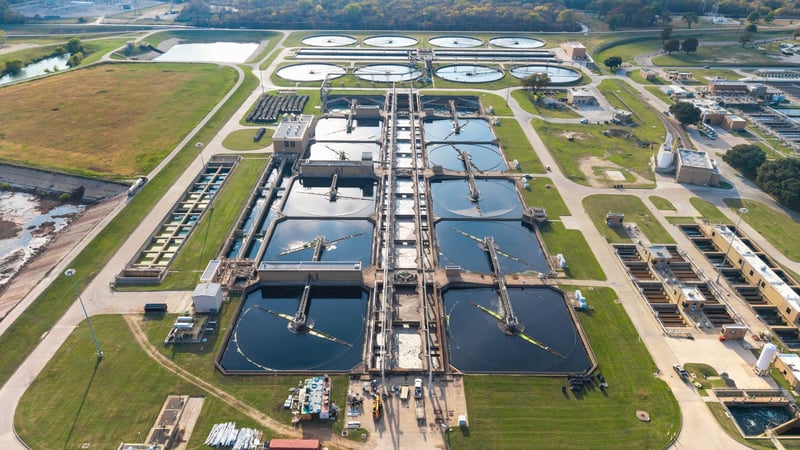
When wastewater treatment capacity becomes constrained, the traditional solution is capital-intensive infrastructure expansion:
- New tanks and treatment lines costing millions
- Construction timelines measured in years
- Increased operational footprint and land costs
- Multiplied energy consumption from additional equipment
- Higher ongoing maintenance costs
- Increased carbon emissions from construction and operations
For many organizations, this approach is becoming financially unsustainable. Particularly as volatility in energy prices continues to drive operational costs upward.
A new paradigm: infrastructure optimized by digital innovation

Digital innovation offers a fundamentally different approach: optimizing existing infrastructure to unlock hidden capacity and performance potential without physical expansion.
Three pillars of digital optimisation
1. Anticipate: free up network capacity
By integrating 24-hour weather forecasts, digital platforms such as Hubgrade by Veolia, can automatically optimize network operation, create available storage capacity, and prepare treatment plants for incoming flows. This predictive approach ensures each installation operates at its maximum potential.
Real-world impact: At a major municipal wastewater treatment facility in Denmark, this anticipatory approach prevented 650,000 m³ of wastewater discharges annually — capacity that was unlocked through better prediction and control, not new infrastructure.
2. Optimize: reduce energy consumption and carbon footprint
The operational carbon footprint of a typical wastewater treatment plant can be broken down into four main sources of emissions:
- Electricity consumption – 52.6%
- Chemical reagents – 19.8%
- Effluent-related emissions – 19.0%
- Nitrous oxide (N₂O) emissions – 8.6%
Digital optimisation helps reduce emissions across all four sources simultaneously, improving both environmental performance and operational efficiency.
Real-world impact: Across all installations equipped with Veolia’s Hubgrade digital optimisation solutions, more than 78,000 tonnes of CO₂-equivalent were avoided in 2024. This clearly demonstrates proven results at scale.
3. Operate: secure operations through specialist expertise
Digital platforms are designed to support operators, not replace them. Hubgrade combines AI-driven optimisation with decades of wastewater process expertise, ensuring that digital recommendations are grounded in real operational knowledge rather than data alone.
Developed by wastewater process specialists and continuously refined through experience gained across hundreds of treatment plants worldwide, Hubgrade embeds proven operational expertise into every optimisation strategy. Advanced algorithms and predictive models work alongside operators, while plant personnel always retain full control of operational decisions.
Every optimisation is built on a transparent and secure framework:
- Operators can override or deactivate optimisation at any time.
- Automatic fallback to local control ensures uninterrupted operation if communication is lost.
- Optimisation is applied only after data quality has been validated.
- AI-generated insights are supported by Veolia's wastewater process experts, who help interpret results,
validate recommendations and continuously optimise plant performance.
Real-world impact: Across Hubgrade-equipped installations, digital monitoring has enabled Veolia to detect 84% of operational incidents before the plant team became aware of them, allowing proactive intervention, minimizing process disruptions and supporting more stable biological treatment performance.
The 2028 regulatory milestone: why action is urgent
By 2028, under EU Directive 2024/3019, wastewater operators face significant new regulatory obligations including mandatory energy audits for large municipal facilities (≥100,000 PE), transition to enhanced reporting frameworks, and Extended Producer Responsibility requirements. For industrial operators, parallel compliance expectations under the Industrial Emissions Directive (IED) and increasing regulatory scrutiny create similar digital infrastructure needs.
Regulatory Context: While EU Directive 2024/3019 primarily targets municipal wastewater infrastructure, its 2028 milestones signal a broader regulatory shift affecting all wastewater operators. Industrial facilities face parallel obligations and increasing expectations for operational transparency, energy efficiency, and environmental performance monitoring.
For operators still relying on manual data collection, this represents a fundamental operational shift. But forward-thinking organizations recognize that the same data infrastructure required for regulatory compliance also enables active operational optimisation, turning regulatory obligation into competitive advantage.
Organizations that begin their digital transformation now have time to build capability gradually, using real-time data not just for reporting, but to optimize energy consumption, predict maintenance needs, and unlock hidden capacity. Those who delay will face compressed timelines and limited options, implementing systems purely for compliance rather than operational excellence.
From energy neutrality to carbon neutrality
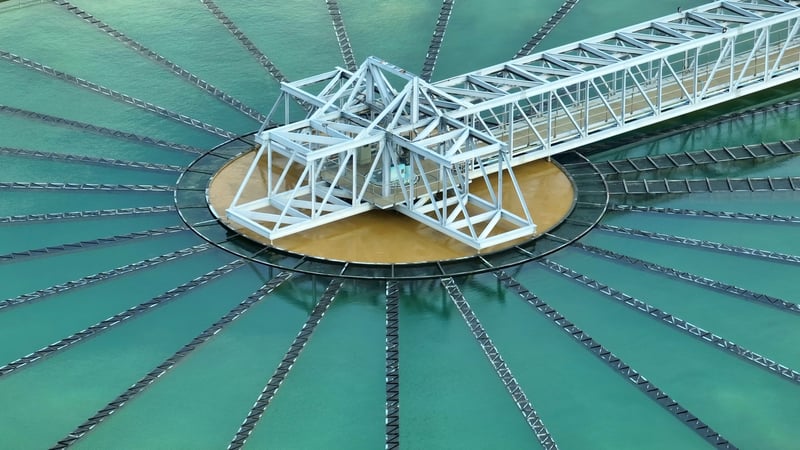
Today's focus is achieving energy neutrality: optimizing operations to minimize energy consumption.
Tomorrow's imperative is carbon neutrality: addressing all sources of greenhouse gas emissions across the treatment process.
Digital platforms provide the foundation for both, delivering:
- Real-time energy optimisation
- Continuous emissions monitoring
- Automated sustainability reporting for CSRD compliance
- Predictive maintenance to extend asset life and defer capital replacement
The potential remains to be unveiled
The transformation of wastewater treatment through digital innovation is already underway across Europe. Organizations that embrace this approach have documented proof that they can:
- Increase treatment capacity by 20-50% without structural modifications
- Reduce energy consumption by 20-40% through real-time optimisation
- Achieve payback periods of less than 6 months in many cases
- Avoid millions in capital expenditure by optimizing existing assets
- Meet compliance requirements with confidence
Next steps: assess your operational readiness
Understanding where your wastewater operation sits on the digital maturity spectrum is the first step toward unlocking hidden capacity, managing operational costs, and preparing for regulatory requirements.
5 Key questions to consider:
- Are you facing capacity constraints that would traditionally require capital-intensive expansion?
- Do you have real-time visibility of energy consumption and operational performance across your treatment assets?
- Can you predict equipment failures before they occur?
- Are you prepared for evolving regulatory requirements including mandatory energy audits and enhanced reporting obligations?
- Could your existing infrastructure handle 20-50% more capacity with better optimisation?
Read more about this topic in our comprehensive whitepaper:
"The energy resilience imperative: How predictive maintenance and asset optimisation safeguard industrial and municipal wastewater operations in an increasingly volatile world"
- Free download using this link -
About Hubgrade
Hubgrade is Veolia's digital monitoring, control, and optimisation platform for water and wastewater operations. Built on more than 30 years of wastewater process control expertise, it combines advanced digital technologies with the operational knowledge of Veolia's specialised wastewater service experts to help industrial and municipal operators reduce energy consumption, improve asset reliability, optimise biological treatment performance, and build long-term operational resilience.
With over 350 wastewater treatment plants optimised globally, Hubgrade delivers proven results: infrastructure enhanced by digital innovation.
Hubgrade is more than a digital platform. It's a partnership that combines technology, process expertise, and continuous service support to unlock the full potential of existing wastewater infrastructure and operations.
.jpg)
Author | Louis Larsen
Louis Larsen began his career seven years ago at Veolia, assuming different roles within various Veolia entities worldwide. Recently taking over the role of digital sales & business development manager. With a background in chemical engineering, specializing in wastewater treatment, digital transformation, and process optimization, Louis now leads the development and growth efforts for Hubgrade Wastewater Plant Performance & Sewer at Veolia Water Technologies.