
.jpeg)
As Uisce Éireann submits planning for the largest water project in Irish history, Commercial Director at Veolia | Water Tech Ireland, Brian Farrell, explores why this €5 billion investment is about far more than pipes and pumps.
December 2025. Uisce Éireann has made history. The utility submitted a planning application comprising over 500 documents for what will become the largest water infrastructure project Ireland has ever undertaken. The numbers alone are staggering: a budget of up to €5.96 billion, a 170-kilometre pipeline stretching from the Shannon to Dublin, and the capacity to serve 1.7 million people.
But behind these figures lies a more fundamental story, one about the choices we make today to secure Ireland's future.
The Vulnerability We Cannot Ignore
Imagine for a moment that 1.7 million people - nearly a third of Ireland's population - depend on a single water source for their daily needs. Now imagine what happens when that source faces contamination, drought, or infrastructure failure. This isn't a hypothetical scenario. It's the reality facing the Eastern and Midlands region today.
Water security is something most people take for granted until it's threatened. Indeed, when you turn on the tap, you expect water to flow. But that simple act depends on decades of planning, billions in investment and infrastructure that most people never see.
The statistics paint a sobering picture. By 2044, just two decades away, the Greater Dublin Area will need 34% more water than it uses today. Population growth, housing development and economic expansion all depend on one fundamental resource. Without it, everything else stops.
A Pipeline That's Really a Lifeline
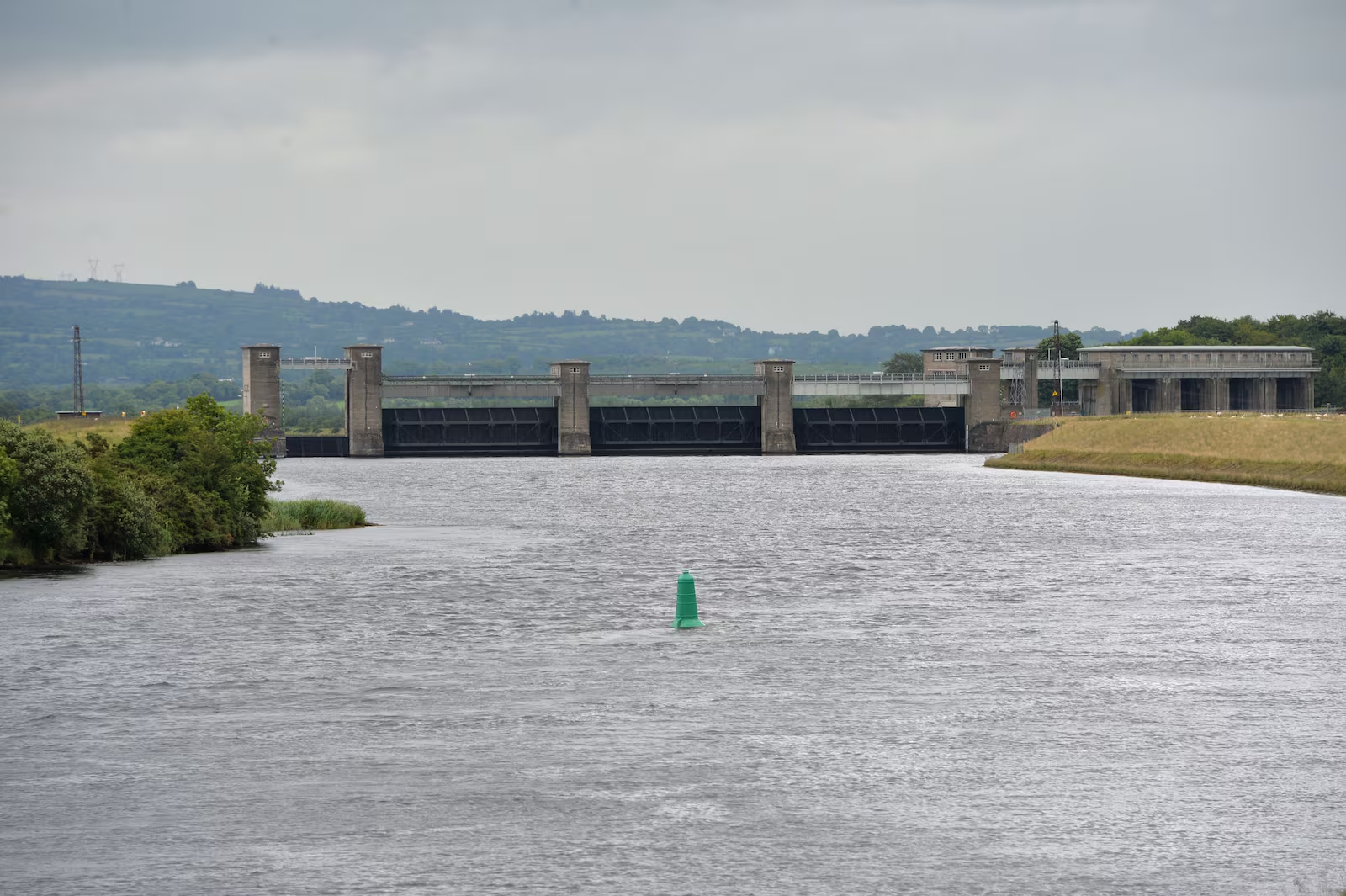
The Water Supply Project Eastern and Midlands Region is ambitious in scope but elegant in concept. Water will be drawn from Parteen Basin on the Lower River Shannon, using just 2% of the river's long-term average flow, treated to the highest standards and piped 170 kilometres through Tipperary, Offaly and Kildare to Peamount in County Dublin.
But calling it simply a pipeline misses the point entirely. This is a water security spine for the nation, infrastructure that will create resilience, enable growth and provide options for communities across multiple counties.
The project will provide direct security of supply to Dublin, Meath, Kildare and Wicklow. But its benefits extend far beyond these counties. By creating a treated water 'spine' with capacity for future connections, communities in Tipperary, Offaly and Westmeath will gain new options for water security. Existing Dublin supplies can be redistributed to Louth, Meath, Kildare, Carlow, and Wicklow. It's a network effect; each connection multiplies the value of the whole system.
The Housing Crisis Meets the Water Crisis
Minister Jack Chambers was direct in his assessment: this project is vital for "unlocking housing in the Eastern and Midlands Region." The connection between water infrastructure and housing delivery is often overlooked, but it's absolute.
Developers cannot build homes without water connections. Businesses cannot expand without reliable supply. Communities cannot grow without the infrastructure to support them. Ireland's housing crisis and its water infrastructure deficit are two sides of the same coin.
Every home that will be built in these regions over the next two decades, every business that will create jobs, every community that will flourish, all depend on decisions being made right now about water infrastructure. The economic analysis is compelling: this project is projected to deliver more than €10 in value for every €1 invested. But the real return cannot be measured purely in monetary terms. It's measured in families housed, businesses sustained, and communities thriving.
What World-Class Water Infrastructure Actually Means
At Veolia, we've spent decades working on projects like this around the world. From Singapore's groundbreaking NEWater programme to major municipal systems across Europe and North America, we've learned what separates adequate infrastructure from truly resilient, future-proof systems.
Modern water infrastructure is far more sophisticated than most people realise. It's not just about moving water from point A to point B. It's about ensuring quality, optimising efficiency, building resilience and minimising environmental impact at every stage.
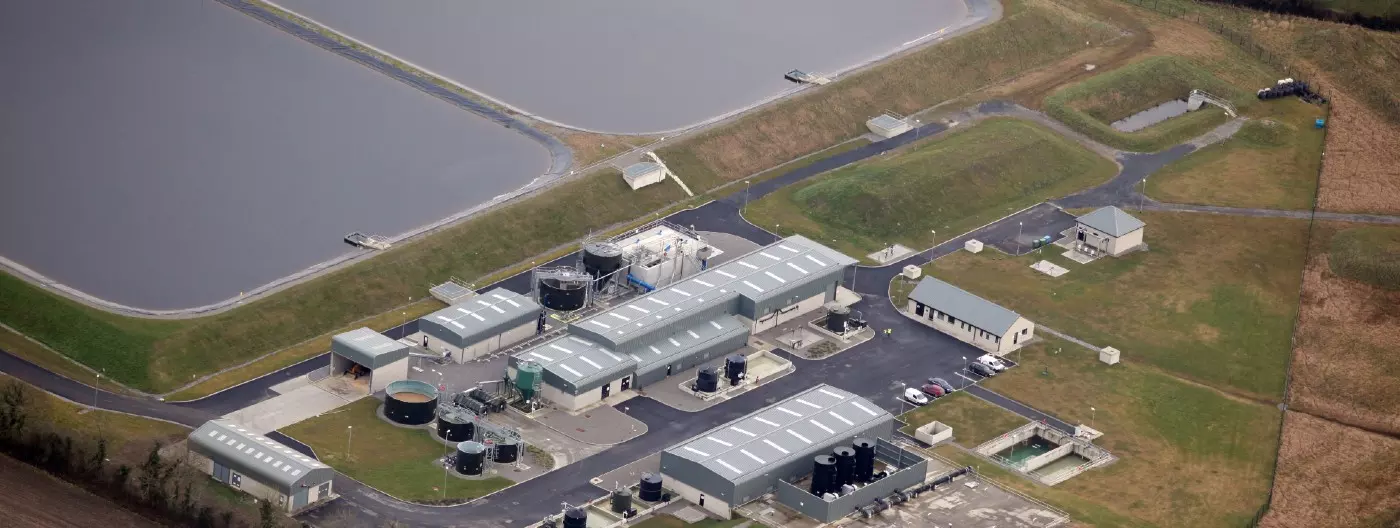
Consider the treatment technologies required for a project of this scale. Advanced membrane filtration removes particles down to microscopic levels. Multi-barrier disinfection ensures safety against a wide range of potential contaminants. Real-time monitoring systems track water quality continuously across the entire network, detecting anomalies before they become problems.
Then there's the intelligence layer. Smart water management systems monitor pressure, flow, and quality across hundreds of kilometres of pipeline. Predictive analytics identify potential maintenance needs before failures occur. Energy optimisation algorithms ensure pumps operate at peak efficiency, reducing both costs and carbon footprint.
The water infrastructure we build today needs to serve communities for 50, 75, even 100 years. So that means designing not just for today's needs, but for climate scenarios we can barely predict, technologies that don't yet exist and communities that haven't yet been built.
Building Resilience in an Uncertain Climate
Climate change adds another layer of complexity and urgency to water infrastructure planning. Ireland is already experiencing more frequent droughts and more intense rainfall events. These patterns will intensify in the coming decades.
Diversification is the key to resilience. By reducing dependence on a single water source, the Eastern and Midlands region will be far better positioned to withstand whatever climate disruptions lie ahead. If one source faces drought, contamination, or other challenges, alternatives exist. This redundancy isn't wasteful - it's essential.
The project also incorporates sustainability by design. Energy-efficient pumping systems, renewable energy integration where feasible, and process optimisation all work to minimise the carbon footprint of moving and treating water across such distances. In an era of climate emergency, even essential infrastructure must be delivered as sustainably as possible.
Communities at the Heart of Development
Infrastructure projects of this magnitude inevitably impact the communities through which they pass. Uisce Éireann has committed to a comprehensive Community Benefit Scheme, including a multi-million euro Community Gain Investment Fund developed with local authorities.
At peak construction, more than 1,000 people will be directly employed, with significant additional spending on local goods and services. But beyond the immediate economic impact, there's a recognition that communities hosting this infrastructure deserve lasting benefits; support for local initiatives, environmental improvements and educational programmes that will endure long after construction is complete.
Over the coming months, dedicated Community Liaison Officers will engage with local stakeholders, ensuring transparency and genuine dialogue throughout the planning and development process. The fact of the matter is that without community support and involvement, even the most technically sound infrastructure projects cannot succeed.
The Partnership Approach
At Veolia, we don't see ourselves as simply contractors or technology providers. We're partners in building water security. That means working alongside utilities like Uisce Éireann to share knowledge, transfer expertise and build local capability.
Irish water professionals will operate and maintain this infrastructure for decades to come. Our role extends beyond construction to embedding the skills, knowledge and experience needed to run world-class water systems within Ireland's water sector.
This partnership approach extends to innovation as well. Water challenges are evolving constantly - new contaminants, changing regulations, emerging technologies. By maintaining strong connections between Irish utilities and global water expertise, we help ensure that Ireland's water infrastructure can adapt and improve continuously.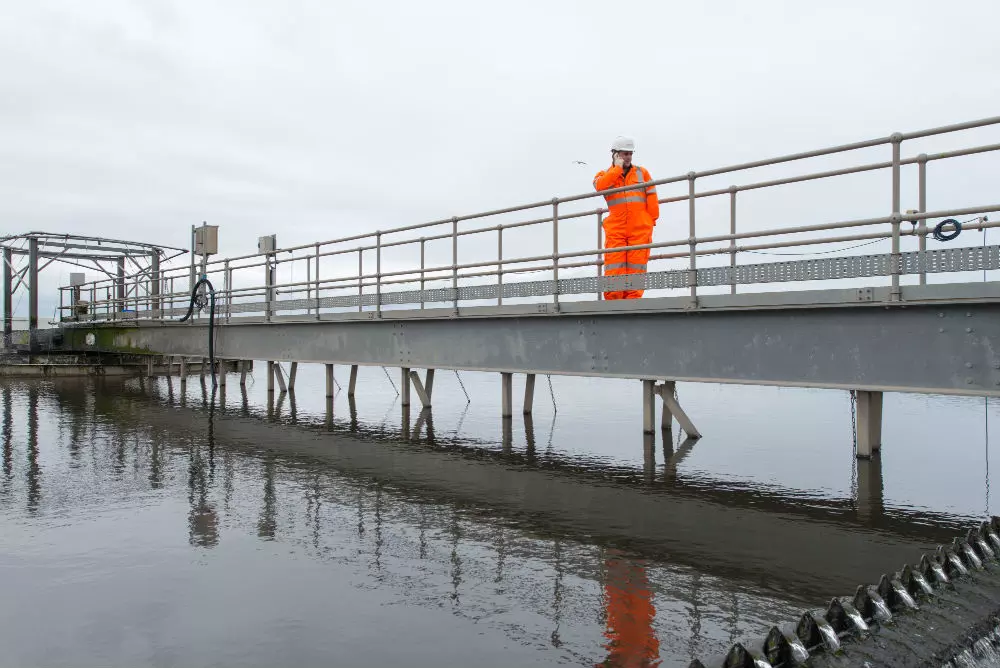
The Timeline Ahead
Subject to planning approval, construction could begin in 2028, with completion targeted within five years. That might seem like a long timeline, but for infrastructure of this scale and complexity, it's remarkably ambitious.
The planning process itself will be comprehensive. With over 500 documents submitted, environmental assessments conducted, and extensive community consultation ahead, every aspect of this project will face rigorous scrutiny. This is appropriate for infrastructure that will serve communities for generations.
Why This Matters Beyond Ireland
While this project is uniquely Irish in its specifics, the challenges it addresses are universal. Cities and regions around the world face similar questions about water security, infrastructure investment and climate resilience.
The decisions Ireland makes about this project will be watched by other nations facing comparable challenges. Will we invest in the infrastructure our future requires? Will we build resilience before crisis forces our hand? Will we take the long view, even when it requires difficult decisions today?
These are the questions that define whether societies thrive or merely survive in the decades ahead.
The Future We Choose
Water security is not a luxury or an afterthought. It is the foundation upon which everything else is built. Health, housing, economic prosperity, community resilience - all depend on reliable access to safe water.
The Water Supply Project Eastern and Midlands Region represents a choice, a decision to invest in infrastructure that will serve Ireland for generations. It's a commitment to resilience over vulnerability, to planning over crisis management, to building the future rather than simply reacting to the present.
Veolia is proud to support projects like this around the world. We've seen firsthand how transformative water infrastructure can be and how it unlocks potential, enables growth and builds resilience in the face of uncertainty.
The decisions being made this week about Ireland's water future will echo for decades. Children not yet born will turn on taps supplied by this infrastructure. Communities not yet built will depend on its capacity. Businesses not yet imagined will rely on its reliability.
That's the true measure of infrastructure investment - not the cost today, but the value delivered across generations. By that measure, the Water Supply Project Eastern and Midlands Region stands as both the largest water project in Irish history and one of the most important investments in Ireland's future.
The question was never whether Ireland could afford to build this infrastructure. The real question is whether we can afford not to.
---
*Veolia partners with utilities and governments worldwide to design, build and operate sustainable water infrastructure. With expertise spanning treatment technologies, smart water management, and large-scale infrastructure development, Veolia supports the delivery of water security for communities across the globe.*